
The Audience and the Fragile World
The Glass MenagerieThis flow traces how the play invites audiences to read symbols, staging, and silence as expressions of family suffering.
increasing Bearing strength in each event
 decreasing
Bearing strength in each eventdecreasingAn Alley of Confinement
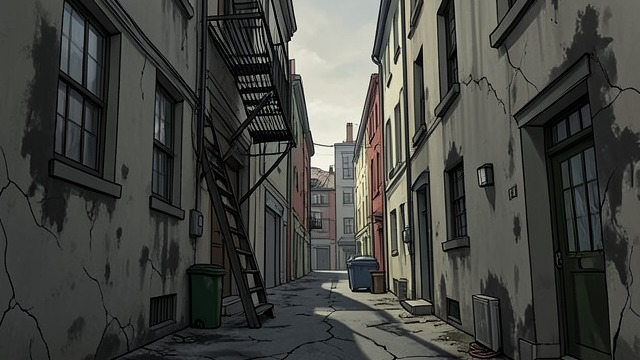
An Alley of Confinement
The Urban Exterior
The audience first sees the dark rear wall of a tenement bordered by narrow alleys and fire escapes. The setting places the family within a crowded, impersonal city.
A Social Condition
The apartment is presented as part of a larger pattern of lower-middle-class life. Individual distress is connected to economic and urban conditions rather than treated as isolated personal weakness.
The Fire Escape as Threshold
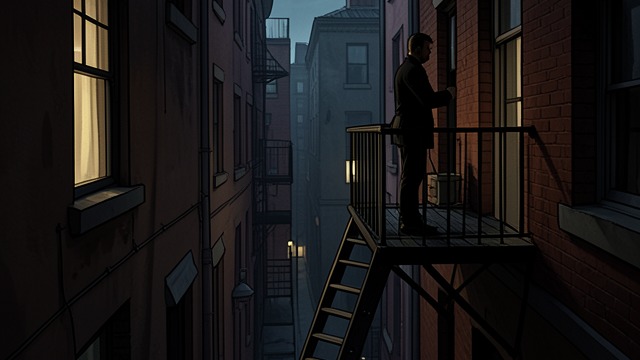
The Fire Escape as Threshold
An Everyday Exit
Tom enters as a sailor and addresses the audience from the fire escape. The structure functions as a practical route between the apartment and the outside world.
A Poetic Escape
Its name gains an accidental symbolic meaning: the family lives amid slow fires of desperation. The threshold promises departure without promising that departure will heal what remains.
Memory’s Selective Light

Memory’s Selective Light
Emphasis and Omission
The play’s lighting does not reproduce ordinary daylight. It selects faces and moments according to their emotional importance in Tom’s recollection.
The Past Reframed
This selective visibility makes memory a dramatic force. What the audience sees is shaped by feeling, so the stage’s beauty and distortion belong to the same act of remembering.
The Storm and the Glass
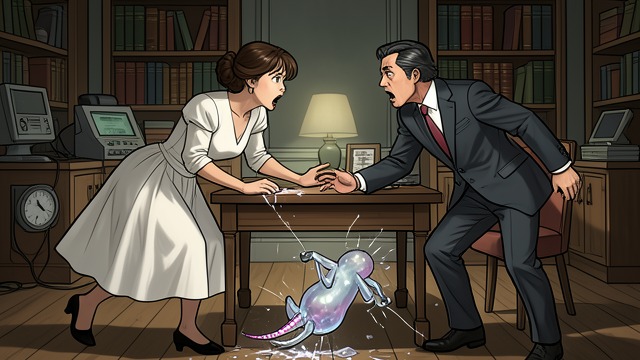
The Storm and the Glass
A Sudden Impact
Laura and Jim dance to music from the neighboring hall and collide with the table. The unicorn falls and loses its horn during a moment of growing intimacy.
Symbolic Ambiguity
Laura’s joke that the animal may feel less different balances acceptance with sadness. The accident can suggest temporary release, but the broken object also anticipates the evening’s disappointment.
The Quiet Final Image
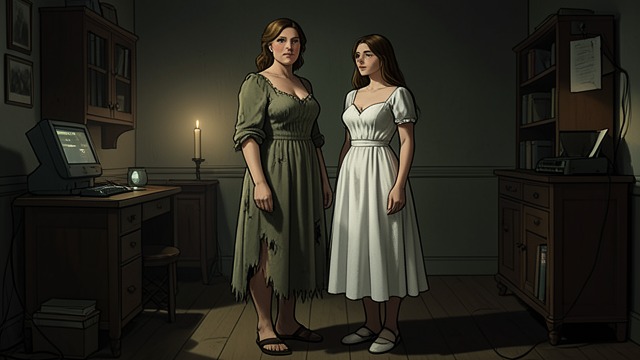
The Quiet Final Image
A Silent Consolation
Amanda’s gestures comfort Laura while Tom speaks from outside the apartment. The audience receives tenderness through movement rather than audible explanation.
Emotional Afterimage
Laura extinguishes the candles, leaving the family’s separation unresolved. The play ends not with reconciliation or a solution, but with an image that continues to haunt the audience’s memory.
Before the apartment is revealed
At Tom’s opening entrance
As the family scenes unfold
During Laura and Jim’s dance
As the curtain falls
